
What Is SIL NDIS and How It Supports Your Independence
Supported Independent Living (SIL) is an NDIS service that pays for help with daily tasks at home. It is designed for people who need a lot of help throughout the day and night. This support helps you build the skills you need to live as independently as possible in your own community.
Your Guide to Supported Independent Living
SIL is all about the people who help you, not the house where you live.
For families in Wonthaggi and Pakenham, SIL can be a life-changing support. It provides a team of workers who stay with you to make sure you are safe and healthy. We work with many SIL participants in Gippsland to manage their funding. Our goal is to make sure your support team is paid so you can focus on living your best life.
What Does SIL Funding Cover in Your Home
SIL funding pays for hands-on help with your daily routine.
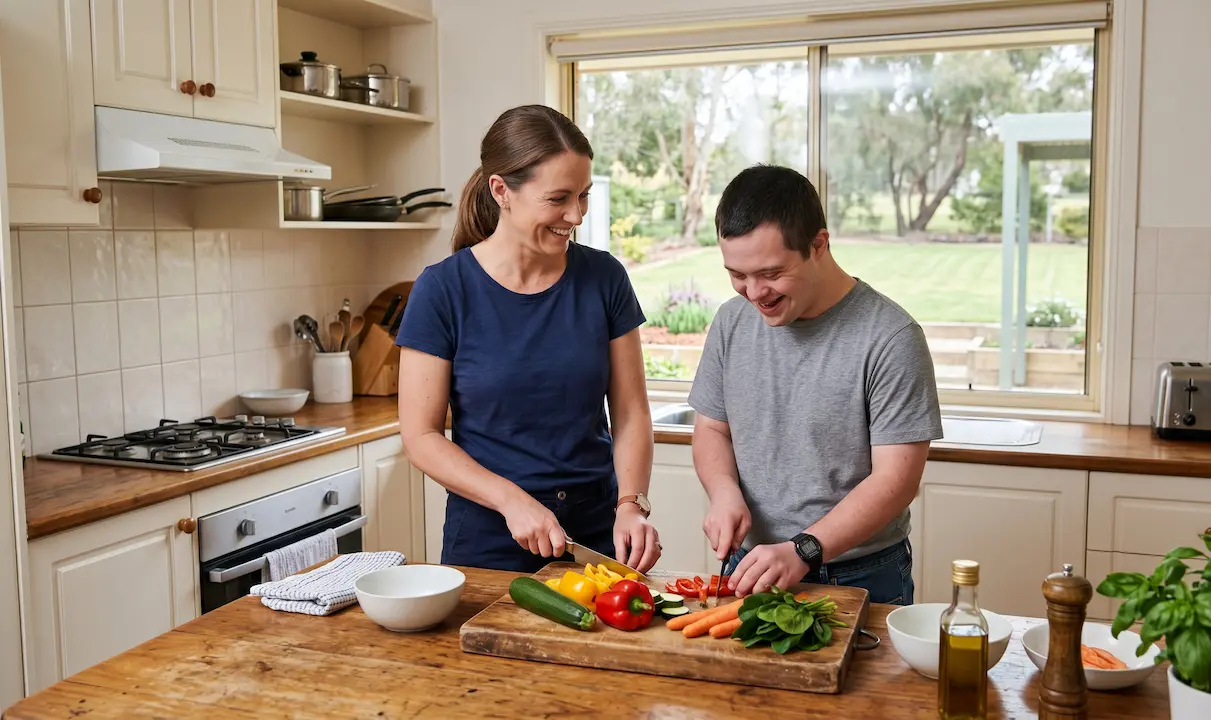
This includes personal care like showering, dressing, and grooming. It also covers help with household chores like cooking meals, laundry, and cleaning. The workers can also help you build new skills. This might include learning how to use public transport in the Bass Coast or how to manage a grocery budget.
What SIL Does Not Pay For
It is important to know that SIL does not cover your basic living costs.
The NDIS will not use SIL money to pay for your rent or your mortgage. It also does not pay for groceries, electricity, water, or gas. These are costs that everyone has to pay for themselves. SIL also does not cover home repairs or big renovations. We suggest reading our guide on how the NDIS helps with housing to see other funding options for the building itself.
Who is Eligible for SIL Support
SIL is for people with higher support needs who need help seven days a week.
This often includes people who need someone to stay with them overnight. You might be eligible if you have an intellectual disability, autism, or a physical condition that makes daily tasks hard to do alone. The NDIS wants to see that you cannot safely live by yourself without this professional help.
Understanding the Difference Between SIL and SDA
Many people get confused between SIL and SDA.
An easy way to remember is that SIL is for the "people" and SDA is for the "place." SDA is for special buildings with ramps or hoists. SIL is for the support workers who come into that building. You do not have to live in a special SDA house to get SIL. You can receive SIL support in a normal rental or even in your family home in Victoria.
Important 2026 Changes for SIL Providers
From 1 July 2026, all SIL providers must be registered with the NDIS Commission.
This is a big change for the disability sector. In the past, some SIL providers were unregistered. Now, the government wants to make sure all SIL services meet high safety standards. This change protects you and ensures your workers are trained and checked.
If you use an unregistered provider now, you may need to find a registered one by July. We help our clients in Gippsland navigate these NDIS planning changes to make sure their care does not stop.
How to Apply for SIL Funding
Applying for SIL requires a lot of evidence.
The NDIS will ask for a Functional Capacity Assessment. This is a report usually written by an Occupational Therapist. It explains exactly what you can and cannot do. You will also need a "Roster of Care." This is a schedule that shows how many hours of help you need every day.
We recommend talking to your Support Coordinator to gather these reports. You can also contact Kera’s Plan Management if you need help understanding how to pay for these assessments through your plan.
How Plan Management Helps SIL Participants
Managing a SIL budget can be complicated because there are many hours of support to track.
When we manage your plan, we take away that stress. We check every invoice from your SIL provider to make sure it matches your Roster of Care. We make sure you are not being overcharged. This leaves you more time to focus on your goals and your independence in the community.
Finding the Right SIL Team in Gippsland
The best SIL provider is one that listens to what you want.
You should feel comfortable with the people coming into your home. Kera has over 10 years of experience in disability support and knows the local Gippsland area well. She understands that choice and control are the most important parts of the NDIS. We support your right to choose a team that fits your personality and your life.
Frequently Asked Questions
Can I get SIL if I live alone?
Yes, you can get SIL if you live by yourself. While many people use SIL in shared houses, it is also available for people who live independently but still need 24-hour support.
Is SIL the same as respite?
No. Respite is usually a short stay away from home. SIL is for your permanent living situation. Respite gives you and your carers a break, while SIL is for your everyday life.
What is a Roster of Car?
A Roster of Care is a document that shows your weekly schedule. It lists exactly when your support workers will be with you. The NDIS uses this to decide how much funding to give you.
Can I use an unregistered SIL provider in 2026?
You can use them until 30 June 2026. After that, the new rules say you must use a registered provider for SIL services. This is to make sure everyone stays safe.
Does SIL cover my travel costs?
SIL covers the support worker's time while they help you in the community. However, things like fuel costs or bus tickets are usually covered by the "Transport" category in your plan, not SIL.